Data Security and Compliance When Outsourcing to a Virtual Assistant

A Virtual Assistant can begin with a harmless task: organize a calendar, research a supplier, or format a document. Then the relationship grows.
The assistant needs the CRM to follow up with a lead. The CRM contains phone numbers and email addresses. To resolve a customer query, they need an order history. To prepare bookkeeping records, they see bank references and invoices. Before long, a person hired to “save a few hours” is working close to the information the business has a duty to protect.
That does not make Virtual Assistant support unsafe. It means data security has to be designed into the delegation — not added after access has already spread.
The safest approach combines five things:
- A clear map of the data involved
- Contracts that reflect the real processing relationship
- Least-privilege, individual access
- Usable standard operating procedures (SOPs)
- A tested incident and offboarding process
An NDA can support this system, but an NDA alone is not a security system and may not satisfy applicable data-protection requirements.
The central rule: outsourcing work does not outsource accountability
When a business asks a Virtual Assistant or VA company to handle personal data on its behalf, the provider may act as a processor or service provider while the client remains the controller or business responsible for the purpose of the processing. The exact legal labels vary by jurisdiction and by what each party actually decides.
The practical point is simple: paying someone else to do the work does not automatically transfer the client's obligations.
In the UK, the Information Commissioner's Office says a controller must use processors that provide “sufficient guarantees” around expertise, resources, reliability, and appropriate technical and organisational measures. In the United States, the Federal Trade Commission's business guidance says an effective security plan includes the security practices of contractors and service providers. UAE laws also impose obligations on controllers and processors, with the applicable regime depending on the organisation and jurisdiction.
This is why the security conversation should happen before credentials are issued.
For context on staffing models, see Virtual Assistant vs Freelancer vs Agency and Employer of Record vs. Outsourced Virtual Assistant.
What sensitive information might a Virtual Assistant handle?
The phrase “administrative work” can hide a surprising amount of data.
| VA task | Information commonly involved | Example risk |
|---|---|---|
| Inbox management | Customer messages, contracts, internal discussions | Sending or forwarding information to the wrong person |
| Calendar management | Names, locations, meeting subjects, travel plans | Revealing confidential relationships or movements |
| CRM updates | Contact details, lead history, notes and preferences | Excessive access, bulk export or inaccurate records |
| Customer support | Orders, addresses, complaints and payment status | Impersonation, oversharing or poor identity verification |
| Bookkeeping support | Invoices, bank references, payroll or tax documents | Fraud, financial exposure or inappropriate retention |
| Recruitment support | CVs, salaries, interview notes and identity documents | Discrimination, unauthorised disclosure or retention |
| Healthcare administration | Appointments and health information | Exposure of specially protected or highly sensitive data |
| Marketing support | Mailing lists, analytics and consent records | Unlawful use, incorrect targeting or lost opt-out records |
The correct controls depend on both the sensitivity of the information and the consequences of misuse. A public supplier telephone number does not require the same treatment as a medical record or passport copy.
For examples of tasks to delegate (and how to scope them), see 50 Tasks to Delegate to a Virtual Assistant.
Why an NDA is not enough
An NDA is useful because it creates contractual confidentiality obligations. It can define confidential business information, restrict disclosure, and set expectations that survive the working relationship.
But it usually does not answer all of these questions:
- Why is personal data being processed?
- Which categories of data and individuals are involved?
- What instructions may the assistant follow?
- What security measures are required?
- Can another person or sub-processor access the data?
- What happens when an individual exercises a privacy right?
- How quickly must an incident be reported?
- Where may the data be accessed or transferred?
- What must be returned or deleted at the end?
- How can the client verify compliance?
Depending on the jurisdiction and relationship, the business may need a data processing agreement (DPA), processor clauses, a business associate agreement (BAA), a service-provider contract, international-transfer terms, or other documents in addition to an NDA.
| Document or control | What it does | What it does not replace |
|---|---|---|
| NDA/confidentiality agreement | Protects defined confidential information and limits disclosure | A DPA, access controls or security procedures |
| Data processing agreement | Sets rules for processing personal data on a client's behalf | The main service scope or technical implementation |
| Service agreement | Defines work, deliverables, fees, responsibilities and termination | Privacy clauses required by applicable law |
| SOP | Tells the assistant how to perform a process safely and consistently | A lawful basis, contract or system permission |
| Access matrix | Records who can access which system and at what level | Training, supervision or incident response |
| BAA | Addresses HIPAA requirements for covered US healthcare relationships | All other privacy, security or commercial terms |
The documents should agree with one another. A contract that says “no local downloads” is meaningless if the working instructions tell the assistant to export customer lists to a personal device.
The SAFE Delegation system
Security works better when it is a repeatable operating model. Use SAFE Delegation before a VA receives sensitive access.
S — Scope the data and the task
Begin with the work, not the software account.
Write down:
- The business purpose
- The exact task
- The data needed to complete it
- The categories of people involved
- The level of sensitivity
- Where the data is stored
- How long the assistant needs access
- What the assistant must never do
Then reduce the data. If the task only requires a customer name and appointment time, do not expose payment records, private notes, or the whole customer database.
Data minimisation is both a privacy principle and a practical risk-control method. Information that was never shared cannot be lost through that workflow.
A — Authorise only the minimum access
The National Institute of Standards and Technology defines least privilege as restricting access to the minimum resources and authorisations needed to perform an assigned function. That principle applies to employees, contractors and third parties.
In practice:
- Create an individual account for the assistant
- Never share a founder's or administrator's master login
- Use a role with limited permissions
- Require multi-factor authentication where available
- Restrict export, deletion, billing and user-management privileges
- Limit access by project, folder, mailbox, pipeline or customer group
- Set an access-review date
- Keep a record of who approved the access
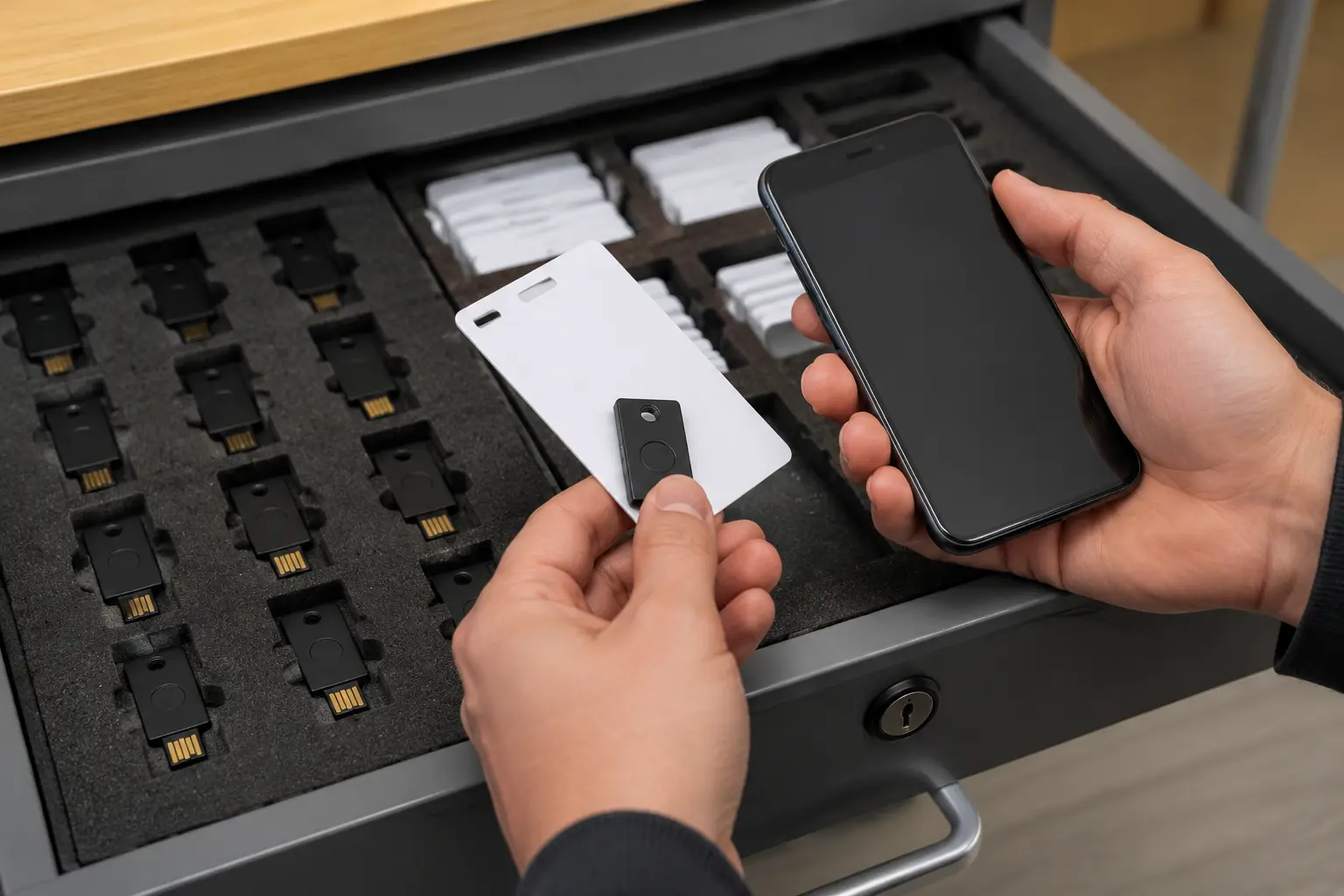
Example access matrix
| System | Access level | Permitted work | Prohibited actions | Review date | Owner |
|---|---|---|---|---|---|
| Shared support inbox | Assigned folders only | Read, draft and label | Change settings or auto-forward | Monthly | Customer Support Lead |
| CRM | Standard user | Update assigned records | Bulk export, deletion or user creation | Monthly | Sales Manager |
| Cloud drive | Project folder | View and edit working files | Share publicly or move files outside folder | Project end | Operations Manager |
| Accounting platform | Document collector | Upload receipts and tag queries | Payments, bank changes or final approval | Fortnightly | Finance Lead |
The matrix is deliberately specific. “CRM access” is not a permission level.
F — Formalise the relationship
The written agreement should match the role each party actually performs.
For personal-data processing, a strong contract commonly addresses:
- Subject matter and duration
- Nature and purpose of processing
- Types of personal data
- Categories of data subjects
- Documented instructions
- Confidentiality commitments
- Required security measures
- Sub-processor approval and flow-down terms
- Assistance with individual rights and regulatory duties
- Incident notification and cooperation
- Data return or deletion
- Evidence, audits and inspections
- Cross-border access or transfer mechanisms
Do not copy a generic online DPA and assume it fits. The contract must reflect the systems, countries, data and service model in use. Obtain legal advice where the risk or regulatory exposure is significant.
E — Execute through secure SOPs
An SOP turns a contract promise into daily behaviour.
A secure SOP should tell the assistant:
- Where the task arrives
- Which system must be used
- What information may be viewed
- What may be copied, downloaded or shared
- How identity is verified
- What requires approval
- What must be escalated
- How completion is recorded
- When working data is deleted
- What counts as a security incident
Use screenshots with fictional or redacted data. Avoid placing real customer records in training material. Test the SOP with a normal case, an incomplete case, and an exception.

SAFE also needs a final step when the work changes or ends: review and revoke. Access that was correct six months ago may be excessive today.
A practical security baseline for Virtual Assistant access
The correct controls should be proportionate to the risk, but the following baseline is appropriate for many business workflows.
Named accounts
Every person should have an individual identity in the system. Shared credentials weaken accountability and make offboarding harder.
Multi-factor authentication
Use MFA wherever available. Hardware security keys or authenticator apps are generally stronger than relying only on SMS, although the best option depends on the system and threat model.
Password manager
Use a business password manager to share credentials when a platform does not support separate users. Do not send passwords through ordinary email or chat.
Approved devices and profiles
Decide whether the assistant may use a personal device, a dedicated work device, or a managed virtual desktop. Set minimum requirements for updates, encryption, screen locking, malware protection, household access and secure disposal.
Approved storage and communication
List the systems that may hold company information. Personal email, consumer file-sharing accounts, unapproved messaging apps, and local desktop folders should not become invisible copies of the business record.
Encryption
Protect data in transit and at rest where appropriate. Encryption helps, but it does not fix excessive permissions or a compromised authorised account.
Logging and monitoring
Enable access logs, change history and alerts for sensitive events such as mass export, forwarding-rule changes, new user creation, or authentication from an unexpected location. Monitoring should be lawful, proportionate and transparent.
Retention and deletion
Define how long working files, exports and messages are kept. Confirm how deletion works in backups and archives rather than promising immediate erasure that the system cannot technically deliver.
Backup and recovery
Security includes availability and integrity, not only confidentiality. Know how to recover records after accidental deletion, ransomware or a platform failure.
For help choosing what to delegate first, see What Every Entrepreneur Should Outsource First.
UK compliance: outsourcing under the UK GDPR
For a UK business, first determine whether the client and provider are acting as controller, processor or joint controllers. The label in the contract is relevant, but the parties' real decision-making matters.
When a VA or VA provider processes personal data on the client's behalf, Article 28 of the UK GDPR generally requires a written controller-processor contract. The ICO's Article 28 guidance identifies required areas including documented instructions, confidentiality, appropriate security, sub-processors, assistance with individual rights and regulatory duties, end-of-contract deletion or return, and audit information.
UK questions to answer before onboarding
- What is the lawful basis for the underlying processing?
- Is special-category or criminal-offence data involved?
- Does the processor contract contain the required terms?
- Has the provider demonstrated sufficient security guarantees?
- Will any sub-processor be used?
- From which countries will people or systems access the data?
- Is an international-transfer mechanism or assessment required?
- Does the privacy notice accurately describe relevant processing and transfers?
- Can the provider help with access, correction, deletion or objection requests?
- Can the provider notify the client immediately about a suspected incident?
International access matters
If a UK organisation gives a VA outside the UK access to personal data, the arrangement may constitute a restricted international transfer. Do not assume that keeping the server in London avoids transfer rules if a person abroad can access the information.
The ICO's international-transfer guidance explains the available routes and checklists. Depending on the destination and arrangement, a business may need an adequacy route, the UK International Data Transfer Agreement, the UK Addendum to EU Standard Contractual Clauses, another safeguard, and an applicable risk assessment. Obtain advice for the actual data flow.
Breach reporting
Not every incident is reportable, but every suspected personal-data breach should be escalated quickly and recorded. The ICO states that a notifiable breach must be reported without undue delay and no later than 72 hours after the controller becomes aware. A processor should notify the controller without undue delay so the controller can assess its duties.
The VA agreement should therefore require immediate internal notification rather than giving the provider 72 hours. The regulatory clock belongs to the controller; waiting two days for a contractor's internal report can leave too little time.
UK data law has also been amended by the Data (Use and Access) Act 2025, and some ICO guidance remained under review in 2026. Check the current ICO position when publishing policies or handling an incident.
UAE compliance: first identify the applicable regime
The UAE's official government portal describes Federal Decree-Law No. 45 of 2021 on the Protection of Personal Data as the federal Personal Data Protection Law. It covers areas including controls for processing, data-subject rights, security and cross-border transfers.
However, a UAE company should not stop at the federal law. The legal landscape can also include:
- The UAE federal PDPL
- DIFC Data Protection Law No. 5 of 2020, as amended
- ADGM Data Protection Regulations 2021
- Sector-specific rules, including rules affecting health, financial or government data
The applicable regime depends on the organisation, location, activity and data. DIFC and ADGM maintain their own data-protection frameworks and regulators. A free-zone company should confirm which regime applies rather than using “UAE compliant” as a broad label.
UAE questions to answer before onboarding
- Which UAE data-protection regime applies to the organisation and processing?
- Is the client a controller and the VA/provider a processor for this work?
- What lawful basis or consent requirement applies?
- Are the processing instructions and security requirements documented?
- Does the provider use sub-processors?
- Will data be accessed or transferred outside the applicable jurisdiction?
- What cross-border mechanism or protection is required?
- How will data-subject requests be supported?
- What is the incident-notification route and deadline under the applicable regime?
- Are a DPO, DPIA, processing record, registration or other formalities required?
The federal law addresses controller and processor duties, breach notification and cross-border transfer conditions. ADGM guidance separately provides processor-contract templates, DPIA materials, breach assessments and standard contractual clauses for transfers. DIFC has its own law and Commissioner. These are not interchangeable checklists.
For UAE organisations handling sensitive or regulated data, have local counsel confirm the correct framework before providing offshore access.
US compliance: security obligations depend on the data and industry
The United States does not offer one short outsourcing rule that covers every VA relationship. Duties may come from federal sectoral laws, state privacy laws, contracts, regulator expectations and the type of information involved.
Examples include:
- Healthcare: A VA or provider that creates, receives, maintains or transmits protected health information on behalf of a HIPAA covered entity or business associate may itself be a business associate or subcontractor. HHS explains that applicable relationships require a compliant BAA and appropriate safeguards.
- Financial services: Businesses covered by the FTC Safeguards Rule must maintain an information-security program with administrative, technical and physical safeguards.
- California: The CCPA applies defined obligations to businesses, service providers, contractors and third parties. Correct contractual classification and use restrictions matter.
- Other states and sectors: Privacy, breach-notification, employment, biometric, children's-data and consumer-health rules may apply.
The FTC's business security guidance recommends considering physical security, electronic security, employee training, and the security practices of contractors and service providers. NIST's least-privilege principle provides a practical baseline even when a specific regulation does not prescribe the exact account configuration.
For US businesses, start with three questions: What data is involved? Which states and industries are involved? What contractual role will the provider perform?
Build an incident process before an incident
An incident is not only a malicious attack. It can be an email sent to the wrong customer, a lost phone, an exported list stored in a personal account, an unauthorised forwarding rule, accidental deletion, or credentials used after a project ends.
Your VA security SOP should say:
Immediately
- Stop the activity if safe to do so
- Disconnect or revoke the affected access where appropriate
- Do not delete evidence or “clean up” logs
- Notify the named client contact through the emergency channel
- Record when the issue was discovered
During initial assessment
- Identify the systems, people and records involved
- Preserve relevant logs, messages and files
- Determine whether data was viewed, changed, exported or made unavailable
- Contain further exposure
- Involve security, privacy, legal and leadership personnel as appropriate
After containment
- Assess notification obligations under the applicable law and contracts
- Document the decision, including a decision not to notify
- Communicate with affected people where required
- Correct the process and verify the fix
- Review whether similar access exists elsewhere
No assistant should be expected to make the final legal breach-notification decision alone. Their duty is to recognise the warning signs and escalate immediately.
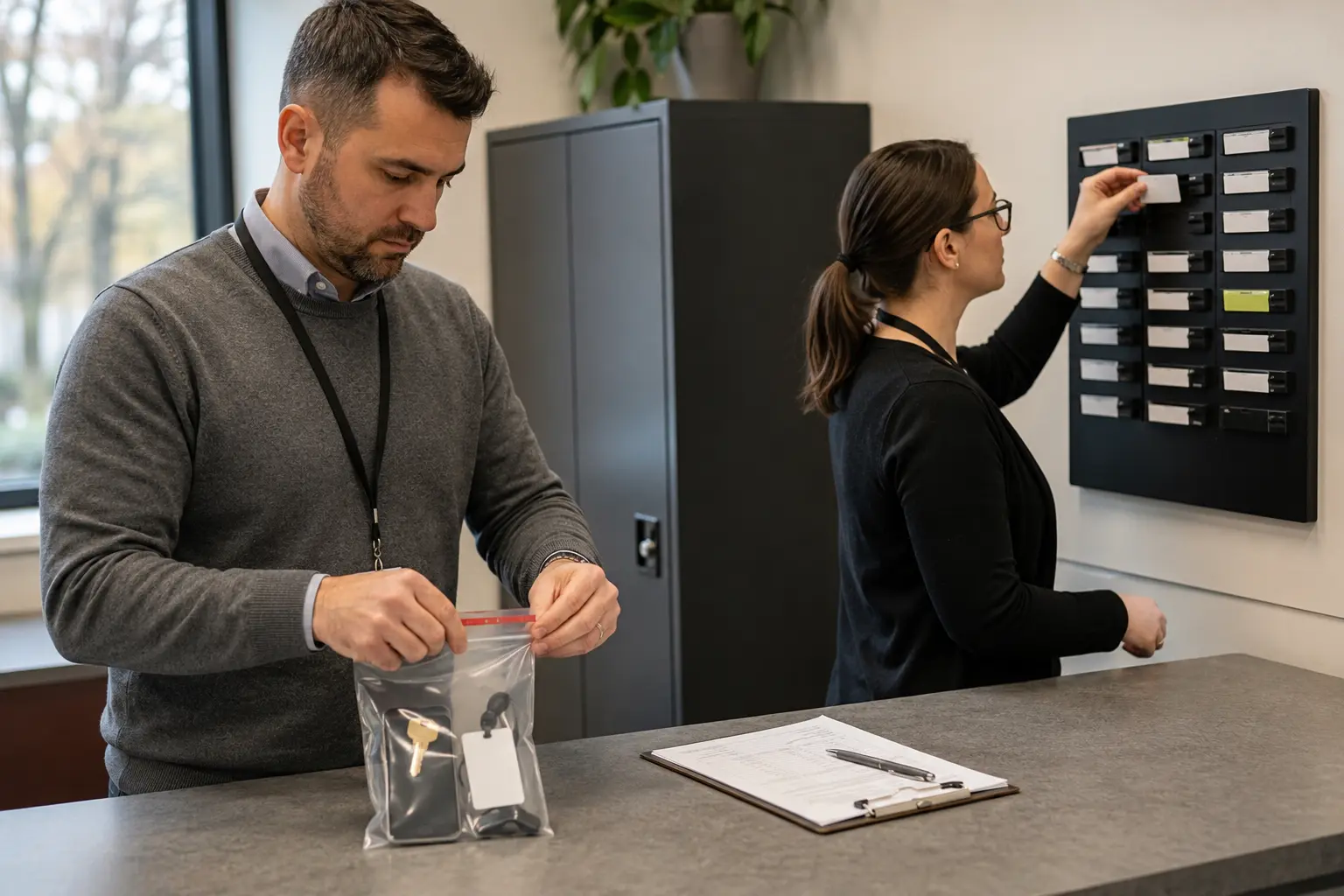
Secure offboarding: the control businesses forget
Offboarding should happen when the relationship ends, the role changes, a project closes, or access is no longer necessary.
Use a checklist that covers:
- Disable user accounts
- Revoke active sessions, tokens and app connections
- Remove shared-vault access
- Rotate any credential that was necessarily shared
- Recover devices, security keys and access cards
- Transfer ownership of files and automations
- Remove forwarding rules and delegated mailbox access
- Confirm return or deletion of working copies
- Record any backup-retention limitation
- Preserve records that must legally be retained
- Obtain final confirmation from the responsible system owners
Red flags when evaluating a VA or outsourcing provider
Be cautious if a provider:
- Says an NDA makes the arrangement “fully compliant”
- Cannot explain where assistants and sub-processors are located
- Uses shared accounts for several clients or workers
- Requests your master password through email or chat
- Has no incident-notification process
- Cannot describe device, storage or deletion controls
- Promises every assistant has access to every service “for convenience”
- Refuses reasonable security questions
- Claims certifications that cannot be verified
- Guarantees compliance without reviewing the data flow
The aim is not to demand enterprise bureaucracy for every calendar task. It is to expect answers proportionate to the risk.
For step-by-step hiring guidance, see How to Hire a Virtual Assistant.
Secure VA onboarding checklist
Before the first sensitive task, confirm:
The downloadable checklist included with this article package expands these points into a working onboarding record.
Frequently asked questions
Is it safe to give a Virtual Assistant access to business systems?
It can be, if access is individual, limited, protected by MFA, monitored appropriately, and supported by contracts, SOPs and offboarding. The risk depends on the data, system, assistant, provider and controls — not simply the job title.
Does a Virtual Assistant need to sign an NDA?
An NDA is often appropriate for confidential business information. It does not replace privacy-law processor terms, a DPA, a HIPAA BAA where required, or technical security controls.
Do I need a DPA with a Virtual Assistant?
Possibly. If the assistant or provider processes personal data on your behalf, applicable law may require processor or service-provider terms. The exact document and clauses depend on the jurisdiction and relationship. Obtain legal advice for your situation.
Can a UK business use a VA outside the UK?
Yes, but overseas access to personal data may be a restricted international transfer. The business must identify a valid transfer route and meet other UK GDPR requirements. Server location alone does not settle the question.
Which data protection law applies to a UAE company?
It depends. The federal PDPL may apply, while organisations in DIFC or ADGM can fall under separate regimes; sector-specific rules may also matter. Confirm the organisation, jurisdiction, activity and data before choosing a compliance framework.
Is a US Virtual Assistant automatically HIPAA compliant?
No. “HIPAA compliant” is not a personal status. If a VA or provider is a business associate or subcontractor, the relationship, contract, safeguards and actual practices must meet applicable HIPAA requirements.
Should a VA use a VPN?
A VPN can protect network traffic or provide controlled access, but it is not a complete security solution. Individual accounts, MFA, device security, permissions, logging and data-handling rules still matter.
How often should VA access be reviewed?
Review sensitive access at regular intervals and whenever the role, project, risk or personnel changes. Monthly review may suit high-impact systems; lower-risk access may be reviewed less frequently. Every account should have a clear owner and an end condition.
Trust is an operating practice
Businesses sometimes treat security as a choice between trust and control. Good outsourcing needs both.
The client should not have to watch every click. The assistant should not have to guess which action is safe. Contracts set the obligations, permissions limit the opportunity for error, SOPs guide the work, and logs and reviews provide evidence when questions arise.
That is what responsible delegation looks like: enough access to complete the task, enough clarity to handle the exception, and no more exposure than the work requires.
If you want to discuss a security-sensitive workflow before delegating it, book a consultation with Ellite Assistant. For a trial, begin with a real but low-risk process and use the same access discipline you would expect in ongoing support: start the $49 seven-day trial for five hours of Virtual Assistant support.
This article provides general operational information and does not constitute legal, regulatory, cybersecurity, tax or professional advice. Requirements depend on the organisation, data, sector, countries, free zones, contracts and current law. Obtain advice from qualified professionals for your circumstances.