What Should a Small Business Owner Automate, Delegate, or Do Themselves?

Running a small business often means wearing too many hats. One hour you may be working with a customer, the next you're answering emails, updating spreadsheets, scheduling meetings, following up with leads, and managing daily operations.
The problem isn't always that you need more employees. Sometimes, you need a better system for deciding what to automate, what to delegate, and what you should continue doing yourself.
A practical approach is:
This approach can help small businesses save time, improve efficiency, and increase their capacity without immediately expanding their full-time team.
What Is the Difference Between Automation and Delegation?
Automation and delegation both reduce the amount of work a business owner personally handles, but they solve different problems.
Automation uses software, integrations, or predefined workflows to complete a task with little or no human involvement.
Delegation means assigning a task to another person who can complete it on your behalf.
For example:
| Task | Best approach | Why |
|---|---|---|
| Appointment reminders | Automate | Repetitive and predictable |
| Invoice reminders | Automate | Follows a defined process |
| Customer complaints | Delegate | Requires human judgment |
| Online research | Delegate | Requires interpretation |
| Business strategy | Owner | Requires decision-making |
| Data synchronization | Automate | Software can handle it |
| Email organization | Delegate or automate | Depends on complexity |
| Lead qualification | Automate + delegate | Combines rules and human judgment |
The objective isn't to automate everything.
The objective is to use the right resource for each type of work.
Why Small Businesses Should Automate and Delegate
Small businesses have limited resources. When the owner spends several hours every week on low-value administrative work, that time cannot be used for sales, strategy, customer relationships, or business development.
Automation and delegation can help solve this problem.
Instead of asking:
How can I work more hours?
Ask:
Which work should I stop doing myself?
That change in thinking can make a significant difference as a business grows.
What Should a Small Business Automate?
A task is usually a good candidate for automation when it is:
- Repetitive
- Predictable
- Rule-based
- Time-consuming
- Performed frequently
- Unlikely to require human judgment
Here are several examples.
1. Appointment Reminders
Instead of manually reminding every customer about an appointment, businesses can use scheduling software to send automatic email or text reminders.
2. Lead Form Notifications
When someone submits a form on your website, an automated workflow can notify the appropriate team member and create a lead record.
3. Invoice Reminders
Recurring payment reminders can often be automated through accounting or invoicing software.
4. Email Notifications
Internal notifications such as new leads, completed forms, or support requests can be automatically routed to the appropriate person.
5. Recurring Reports
If a report uses the same data and structure every week or month, parts of the reporting process may be automated.
6. Data Synchronization
Connecting business applications can eliminate repetitive copying and pasting between systems.
7. Customer Follow-Up Workflows
Certain routine follow-ups can be triggered automatically based on customer actions.
What Should a Small Business Delegate?
Not every repetitive task should be automated.
Some work requires human communication, judgment, research, organization, or attention to detail.
These tasks can often be delegated to a team member or Virtual Assistant.
Examples include:
- Email management
- Calendar management
- Online research
- Data entry
- Spreadsheet updates
- Customer support
- Appointment scheduling
- Lead research
- CRM updates
- Social media assistance
- Bookkeeping administration
- Recruitment coordination
- Document organization
- Follow-up activities
- Administrative support
For more ideas, check out our guide:
What Should the Business Owner Do Personally?
Automation and delegation don't mean that a business owner should stop being involved in the business.
Some responsibilities are better kept with the owner or senior leadership.
Business Strategy
Decisions about the company's direction, positioning, pricing, and growth strategy usually require the owner's knowledge and judgment.
Important Customer Relationships
Key accounts and strategic relationships may require direct involvement from the business owner.
Major Financial Decisions
Budgeting, investments, major expenses, and financial strategy should be handled by appropriately qualified decision-makers.
Sales Strategy
Lead research and administrative sales tasks can be delegated, but important sales conversations and strategic negotiations may require the owner's involvement.
Product and Service Decisions
Business owners should remain involved in decisions that directly affect their products, services, and customers.
The 3-Level Business Task Framework
A simple way to evaluate your workload is to place every recurring task into one of three categories.
Level 1: Automate
Ask:
Can software complete this task reliably?
If yes, consider automation.
Examples:
- Notifications
- Reminders
- Data synchronization
- Recurring workflows
- Basic reporting
Level 2: Delegate
Ask:
Does this task require a person but not necessarily me?
If yes, consider delegation.
Examples:
- Research
- Administrative support
- Customer communication
- Scheduling
- Data management
- Lead research
Level 3: Own
Ask:
Does this require my experience, authority, or strategic judgment?
If yes, keep ownership of the task.
Examples:
- Business strategy
- Major decisions
- Key relationships
- Strategic negotiations
- Company direction
This framework helps prevent business owners from spending valuable time on work that someone else—or software—can handle.
Automation vs. Delegation: Which Is Better?
There isn't one answer for every business.
| Factor | Automation | Delegation |
|---|---|---|
| Human involvement | Low | High |
| Repetitive tasks | Excellent | Good |
| Complex tasks | Limited | Excellent |
| Human judgment | Usually not required | Often required |
| Flexibility | Limited by workflow | High |
| Setup | Software and configuration | Training and onboarding |
| Ongoing management | Usually low | Requires management |
| Communication | Limited | Excellent |
| Research | Limited | Excellent |
| Customer interaction | Limited | Excellent |
In many cases, the best solution is both.
For example, a business could automatically capture a website lead and then have a Virtual Assistant review the information, update the CRM, research the prospect, and prepare a follow-up.
How Automation and Virtual Assistants Work Together
Automation doesn't have to replace human support.
Instead, automation can make a Virtual Assistant more productive.
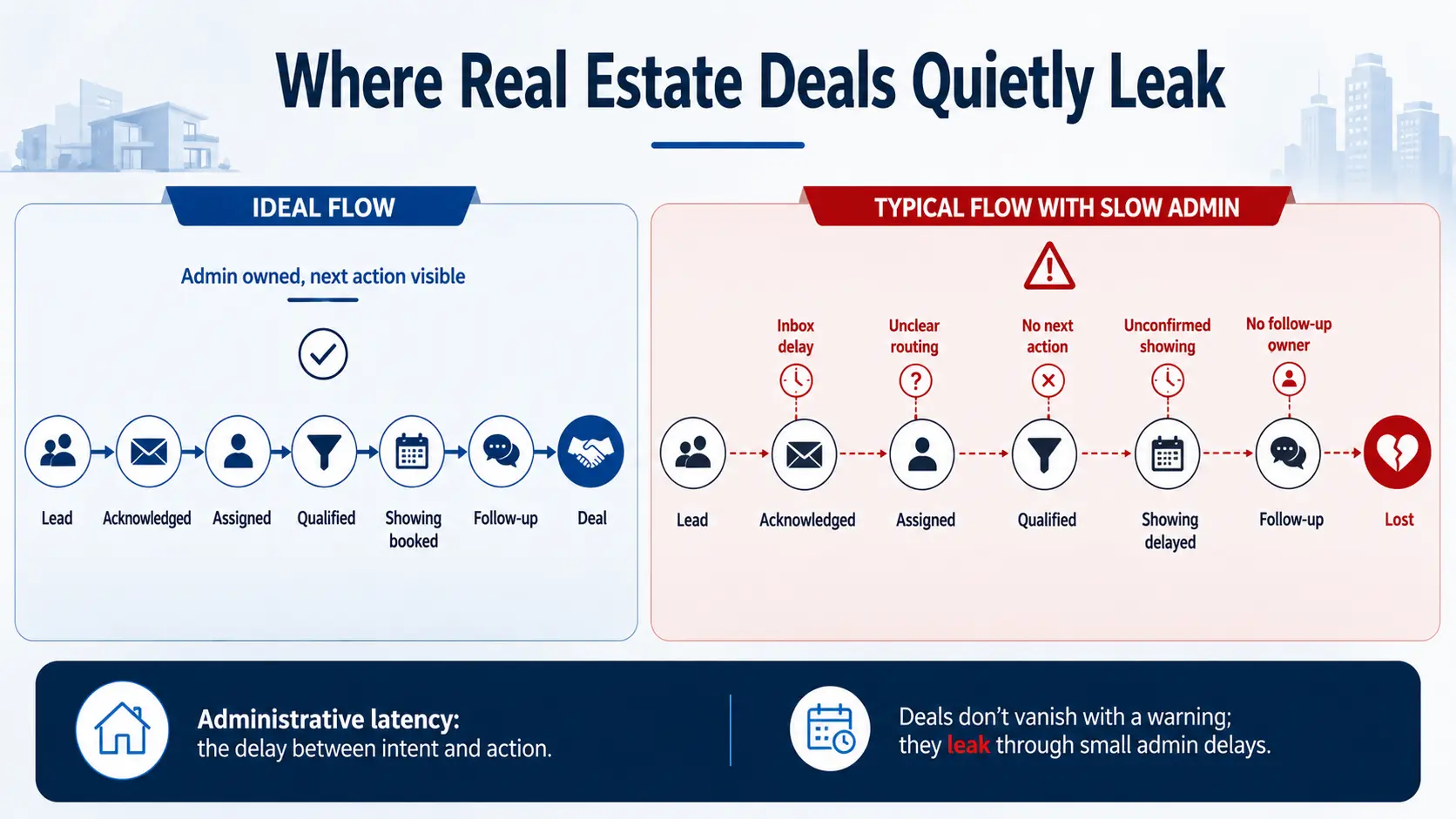
Consider this workflow:
- Website form submitted
- Automatic lead notification sent
- CRM record created
- Virtual Assistant reviews the lead
- Additional research completed
- Follow-up scheduled
- Sales team handles the qualified opportunity
This combination can reduce manual work while keeping human involvement where it provides the most value.
10 Tasks Small Businesses Can Automate or Delegate
| Business task | Automate | Delegate |
|---|---|---|
| Appointment reminders | ✓ | |
| Lead notifications | ✓ | |
| Invoice reminders | ✓ | |
| Email organization | ✓ | |
| Online research | ✓ | |
| Customer support | ✓ | |
| Data entry | ✓ | |
| Calendar management | ✓ | |
| CRM updates | ✓ | ✓ |
| Lead qualification | ✓ | ✓ |
The right solution depends on the complexity of your workflow and the level of human involvement required.
How to Find Tasks You Should Stop Doing Yourself
You don't need to completely redesign your business to start.
Begin with a simple business task audit.
For one week, write down the tasks you personally perform.
Record:
- Task name
- Time spent
- Frequency
- Difficulty
- Whether it requires your expertise
- Whether software could perform it
- Whether another person could perform it
Then classify each task.
Example:
| Task | Time per week | Classification |
|---|---|---|
| Email organization | 3 hours | Delegate |
| Appointment reminders | 1 hour | Automate |
| Data entry | 2 hours | Delegate |
| Business strategy | 3 hours | Owner |
| Lead research | 3 hours | Delegate |
| Weekly reporting | 1 hour | Automate or delegate |
If you're spending 10–15 hours each week on tasks that don't require your direct involvement, that's a significant opportunity to improve your operating model.
A Simple Delegation Audit
Ask these questions about every recurring task:
Does this task generate revenue directly?
If not, consider whether it needs to remain with you.
Does this require my personal expertise?
If not, delegation may be possible.
Does the task follow a repeatable process?
If yes, automation or a standard operating procedure may be appropriate.
Does it require human judgment?
If yes, delegation may be better than full automation.
Could another trained professional complete it?
If yes, document the process and consider delegating it.
How a Virtual Assistant Fits Into a Lean Business Model
A Virtual Assistant can provide human support for tasks that aren't suitable for complete automation.
For example, a small business may use software to automatically collect leads but still need someone to:
- Research prospects
- Organize lead information
- Update the CRM
- Respond to routine inquiries
- Schedule appointments
- Follow up with prospects
- Prepare reports
A Virtual Assistant can handle these responsibilities while the business owner focuses on higher-value activities.
For businesses that need ongoing support, a dedicated Virtual Assistant can become an extension of the internal team.
How to Scale a Small Business Without Hiring Too Quickly
Growing a business doesn't always mean immediately adding more full-time employees.
A more flexible approach can be:
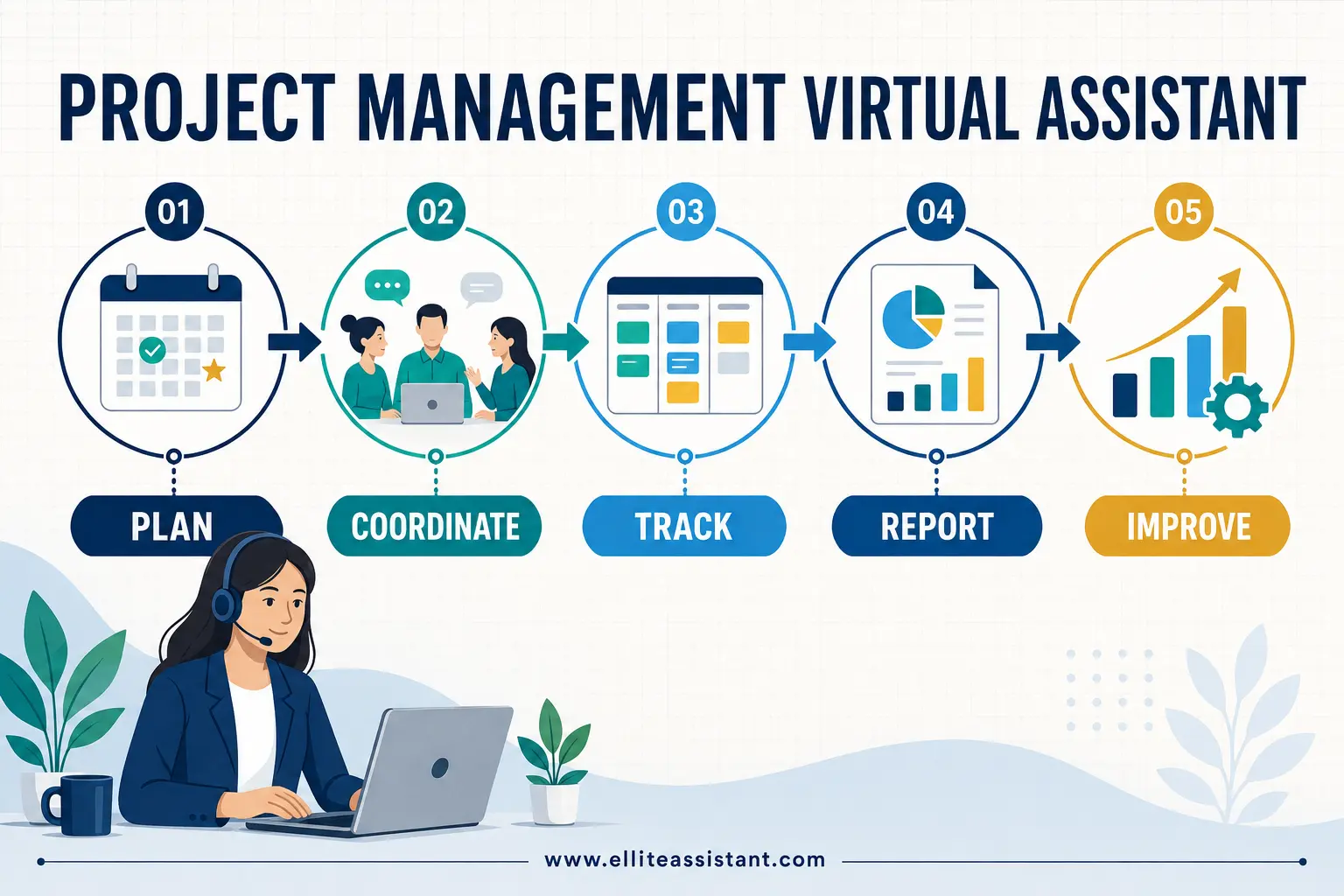
Step 1: Automate predictable work
Remove unnecessary manual processes.
Step 2: Document recurring processes
Create simple standard operating procedures.
Step 3: Delegate operational tasks
Assign appropriate responsibilities to trained professionals.
Step 4: Measure the results
Monitor time saved, accuracy, response times, and business outcomes.
Step 5: Expand support as demand grows
Increase staffing when the workload and business requirements justify it.
This approach can give a small business more operational flexibility.
For more guidance, read:
When Should You Consider Hiring a Virtual Assistant?
You may want to consider a Virtual Assistant when:
- Administrative work is taking several hours each week
- Customer inquiries are becoming difficult to manage
- You are missing follow-ups
- Your calendar is becoming difficult to maintain
- Data entry is taking time away from more important work
- You need additional operational capacity
- You want flexible support without immediately adding another full-time position
- Business growth is creating more recurring work
The goal isn't simply to hire someone.
The goal is to remove the right work from your workload.
If you already know which tasks you want to delegate, explore Ellite Assistant's Virtual Assistant Services.
15 Tasks You Can Delegate to a Virtual Assistant
Here are some common starting points:
- Email management
- Calendar management
- Data entry
- Online research
- Spreadsheet management
- Appointment scheduling
- Customer support
- CRM updates
- Lead research
- Document organization
- Social media assistance
- Bookkeeping administration
- Recruitment coordination
- Follow-up management
- Reporting assistance
These are only examples. The right tasks depend on your business, processes, and the skills required.
For a more comprehensive list, read 50 Tasks to Delegate to a Virtual Assistant.
How to Create a More Efficient Small Business
A more efficient business isn't necessarily one where everyone works faster.
It's one where the right person or system handles the right task.
A practical operating model might look like this:
- Strategic decisions: Business owner or leadership
- Predictable processes: Automation
- Recurring human tasks: Virtual Assistant or team
- Specialized work: Qualified specialist
This allows the owner to spend more time on work that actually requires their expertise.
Frequently Asked Questions
What should a small business automate first?
Start with repetitive, predictable tasks such as notifications, appointment reminders, recurring workflows, data synchronization, and routine reporting. Choose processes that follow consistent rules and don't require significant human judgment.
What should a small business delegate?
Common tasks to delegate include administrative work, email management, data entry, online research, scheduling, customer support, CRM updates, lead research, and other recurring operational activities.
Is it better to automate or hire a Virtual Assistant?
It depends on the task. Automation works well for predictable, rule-based processes, while Virtual Assistants are better suited to tasks requiring communication, judgment, research, organization, or human interaction. Many businesses benefit from using both.
Can a small business run without hiring full-time employees?
Some businesses can operate with a lean internal team by combining automation, outsourcing, contractors, and Virtual Assistants. However, the right staffing model depends on the business's size, industry, workload, and operational requirements.
How can a Virtual Assistant help a small business?
A Virtual Assistant can handle recurring administrative, customer support, research, scheduling, data management, marketing, sales support, bookkeeping administration, HR coordination, and other tasks that don't require the business owner's direct involvement.
How do I know which tasks to delegate?
Track your work for a week and identify tasks that are repetitive, time-consuming, process-driven, and don't require your personal expertise. Those tasks are often good candidates for delegation or automation.
Can automation and Virtual Assistants be used together?
Yes. Automation can handle predictable steps while a Virtual Assistant manages tasks requiring human judgment or communication. Combining both can create a more efficient workflow.
Final Takeaway
Small business growth doesn't always require doing more work or immediately hiring more full-time employees.
A better approach is to examine how your business operates and determine:
- What can be automated?
- What can be delegated?
- What should I continue doing myself?
Automate predictable processes, delegate recurring human tasks, and protect your own time for strategy, customers, sales, and business growth.
If you're spending too much time on administrative or operational work, a Virtual Assistant can provide flexible support without requiring you to manage every task yourself.