Virtual Assistant for Accountants: Bookkeeping, Client Management & Tax Support
A Virtual Assistant for accountants is a remote professional who helps accounting firms manage bookkeeping support, client communication, document organisation, scheduling and administrative workflows. By handling repetitive operational tasks, Virtual Assistants allow accountants to focus on financial analysis, compliance decisions and client advisory services.
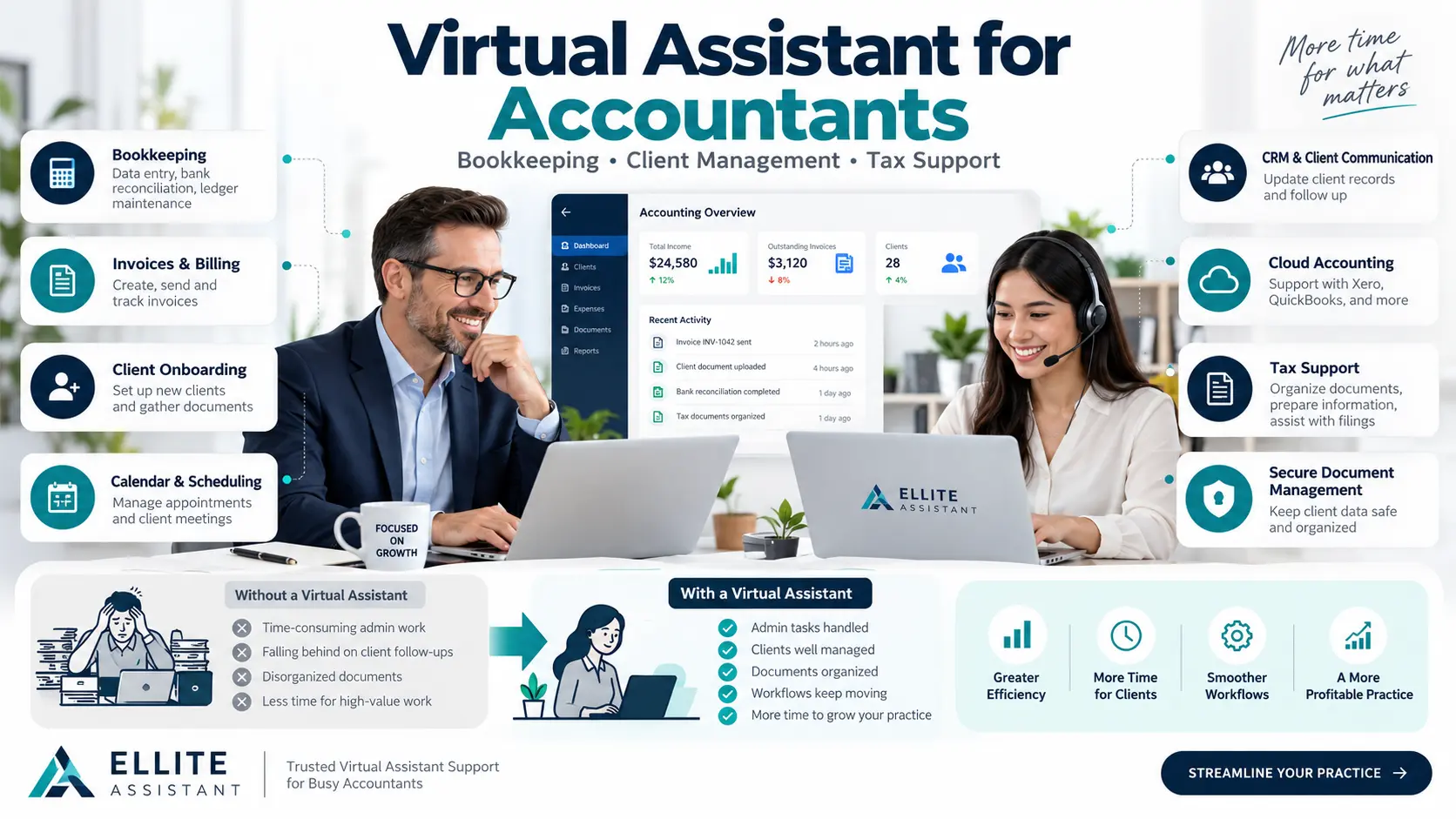
Accounting firms are under constant pressure to manage client communication, bookkeeping deadlines, compliance tasks and growing administrative workloads. While accountants focus on financial advice and client strategy, many routine tasks continue to consume valuable time.
That is why many modern accounting firms are choosing to hire a Virtual Assistant for accountants who can support bookkeeping workflows, client management, document organisation and day-to-day administrative tasks.
Why do accountants need a Virtual Assistant?
Accounting professionals spend significant time managing repetitive operational tasks such as collecting documents, following up with clients, updating records and organising financial information.
A specialised accounting Virtual Assistant can take ownership of these recurring activities, allowing accountants and firms to focus on analysis, advisory services and client relationships.
- Reduce administrative workload
- Improve client response times
- Keep bookkeeping workflows organised
- Support deadline management
- Maintain accurate records and documentation
Bookkeeping support a Virtual Assistant can provide
A bookkeeping Virtual Assistant can assist accounting teams with routine financial administration while following the firm's processes and approval requirements.
| Bookkeeping Task | How a Virtual Assistant Helps |
|---|---|
| Data entry | Updates financial records and maintains organised information |
| Transaction categorisation | Helps organise income and expense records based on provided guidelines |
| Invoice management | Tracks invoices, payment status and follow-ups |
| Bank reconciliation support | Prepares records and highlights items requiring review |
| Document organisation | Maintains financial files and client documents |
Client management support for accounting firms
Client communication is one of the most important parts of accounting services. A Virtual Assistant can help firms maintain consistent communication without adding more pressure to accountants.
Client onboarding
A VA can prepare onboarding checklists, collect required documents, organise client information and ensure that new clients move smoothly through the process.
Email and communication management
A Virtual Assistant can monitor routine enquiries, organise emails, prepare responses and identify messages that require accountant attention.
Appointment scheduling
From consultation calls to tax meetings, a VA can manage calendars and help reduce missed appointments.
Tax preparation and compliance support
A Virtual Assistant does not replace a qualified accountant. Instead, they support the preparation process by organising information and completing administrative workflows.
| Tax Support Activity | Virtual Assistant Role |
|---|---|
| Document collection | Collects required files from clients and organises them |
| Deadline reminders | Tracks upcoming tasks and client follow-ups |
| Data preparation | Prepares organised information for accountant review |
| Client updates | Handles routine status communication |
Virtual Assistant vs hiring an in-house accounting employee
| Business Need | In-house Employee | Virtual Assistant |
|---|---|---|
| Cost flexibility | Fixed employment costs and overheads | Flexible support based on workload |
| Administrative tasks | Handles assigned office tasks | Focuses on specific outsourced workflows |
| Scaling support | Requires additional hiring | Can increase support as needs grow |
| Remote working | Usually office-based | Designed for remote collaboration |
Benefits of hiring a Virtual Assistant for accountants
| Challenge | How a VA Helps |
|---|---|
| Too much administrative work | Takes ownership of repetitive tasks |
| Delayed client responses | Improves communication workflows |
| Busy tax seasons | Provides additional operational support |
| Disorganised documents | Keeps records structured and accessible |
| Limited growth capacity | Creates more time for advisory services |
How to hire the right accounting Virtual Assistant
Hiring a VA for accounting support is not only about finding someone who can complete tasks. The right person should understand workflows, confidentiality and the importance of accuracy.
| What to Evaluate | Useful Question |
|---|---|
| Accounting experience | Have they worked with financial records or accounting workflows? |
| Attention to detail | How do they maintain accuracy in repetitive tasks? |
| Software knowledge | Can they work with your accounting systems? |
| Communication | How do they manage client information and updates? |
| Security awareness | Do they understand confidential financial data handling? |
Ready to hire a Virtual Assistant for your accounting business?
Ellite Assistant helps accounting firms identify repetitive workflows, organise support requirements and connect with Virtual Assistants who can support bookkeeping, client communication and administrative operations.
Spend less time managing tasks. Spend more time helping clients.
Hire a Virtual Assistant who understands business workflows and helps your accounting practice operate efficiently.
Book a consultationFrequently asked questions
What does a Virtual Assistant do for accountants?
A Virtual Assistant can support accountants with bookkeeping administration, document organisation, client communication, scheduling, reporting preparation and routine operational tasks.
Can a Virtual Assistant do bookkeeping?
Yes, a trained Virtual Assistant can support bookkeeping-related activities such as data organisation, transaction preparation and record management based on the firm's processes.
Can a Virtual Assistant replace an accountant?
No. A Virtual Assistant supports accountants by handling operational tasks, while qualified accountants remain responsible for professional financial decisions and advice.
How much does an accounting Virtual Assistant cost?
The cost depends on experience, working hours, responsibilities, software knowledge and the level of accounting support required.
What software can accounting Virtual Assistants use?
Depending on training and permissions, Virtual Assistants may work with accounting platforms, CRM systems, project management tools and communication software used by the business.
A Virtual Assistant supports accounting operations but does not replace professional accounting, tax or financial advice. Firms should define access permissions, confidentiality requirements and approval processes before sharing financial information.
What does a Virtual Assistant do for accountants?
- What is an accounting Virtual Assistant?
- What tasks can a Virtual Assistant do for accountants?
- Can a Virtual Assistant prepare tax returns?
- Can a Virtual Assistant use QuickBooks?
- How much does a bookkeeping Virtual Assistant cost?
- Should an accounting firm hire a Virtual Assistant?
- What is the difference between a bookkeeper and a Virtual Assistant?
- Can Virtual Assistants handle client communication?
- How do accounting firms outsource administrative work?
- Are Virtual Assistants secure for handling financial information?