Strategic Partner vs. Task-Doer: The One Question That Predicts If a VA Will Scale With You
he best way to predict if a Virtual Assistant will scale with your business is to ask: “When the outcome is clear but the instructions are incomplete, what do you do next?” A strategic VA clarifies the goal, asks focused questions, starts safe work, escalates risks and reports results. This article provides a CLEAR response framework, a scoring rubric, red flags and a 30‑day plan to move from tasks to ownership.

The most useful question to ask a Virtual Assistant candidate is: “When the outcome is clear but the instructions are incomplete, what do you do next?” A task-doer usually waits for more directions or starts guessing. A strategic VA clarifies the missing information, states reasonable assumptions, proposes a safe next step, flags risks and keeps the work moving within agreed authority.
No single interview question can guarantee that a VA will scale with your business. However, this question gives U.S. small-business owners a practical view of how the candidate handles ambiguity, ownership, judgment and communication—the behaviors that matter when support grows beyond a simple task list.
The goal is not to find someone who acts without approval. It is to find a Virtual Assistant who can move routine work forward, recognize exceptions and bring you decisions instead of repeatedly bringing you problems. If you are still deciding what should be delegated, begin with our list of 50 tasks to delegate to a Virtual Assistant.
The one question to ask a Virtual Assistant candidate
Then stop talking. Do not rescue the candidate by explaining what a strong response should contain. Give them enough time to think and listen for the sequence they naturally follow.
A strong candidate might say:
“First, I would confirm the result you need and the deadline. I would identify which missing details could change the outcome, then ask focused questions about those points. If there is a safe, reversible part I can begin, I would start it and document my assumptions. I would escalate anything involving money, sensitive data, client commitments or a decision outside my authority. Then I would report what is complete, what is blocked and the exact decision I need from you.”
That answer is useful because it combines initiative with control. The candidate is not asking the owner to rewrite the entire assignment, but they are also not treating uncertainty as permission to improvise.
Why “What would you do?” is better than “Are you proactive?”
Most candidates will say they are proactive, organized and detail-oriented. Those labels reveal little. A scenario question requires the person to describe behavior: what they check, what they ask, what they can start safely and when they escalate.
For additional interview structure, use our step-by-step VA hiring guide alongside this diagnostic question.
Why this question separates ownership from task completion
It tests whether the candidate thinks in outcomes
A task-doer focuses on the instruction: “Send the report.” An ownership-minded assistant focuses on the condition that should be true afterward: the report is accurate, reaches the right people, highlights exceptions and creates a clear next action.
This does not make the VA responsible for the owner’s strategy. It means the assistant understands why the delegated work exists and can check whether their execution produced the intended operational result.
It reveals how they handle missing context
Growing businesses rarely produce perfect instructions. Customer details change. A form breaks. A stakeholder replies late. The calendar conflicts with the service promise. A scalable assistant does not ignore those gaps. They separate what is known, what is assumed and what requires a decision.
It exposes the difference between initiative and recklessness
“I would just figure it out” can sound confident, but it may signal unsafe improvisation. Strategic support operates within boundaries. The candidate should know that a reversible spreadsheet cleanup is different from issuing a refund, changing pricing, sending legal language or making a promise to a customer.
It shows whether communication reduces management load
A weak escalation says, “This is not working. What should I do?” A useful escalation says, “Two fields stopped syncing at 9:10 a.m. I can enter today’s five leads manually while the issue is investigated. No records will be lost. I need approval before changing the automation. Do you want me to use the manual workaround?”
The second message gives the owner context, a recommendation, the risk and one decision. That is what reduces management burden.

Four answers you are likely to hear
| Response type | What it may sound like | What it signals | Best fit |
|---|---|---|---|
| Dependent task-doer | “I would wait until you give me all the steps.” | Low ambiguity tolerance and high management demand. | Stable, tightly documented work with close supervision. |
| Literal executor | “I would complete what I can and ask questions when I get stuck.” | Useful execution, but limited attention to the wider outcome. | Routine tasks with clear acceptance criteria. |
| Operational owner | “I would confirm the outcome, identify missing decisions, propose a safe approach and report exceptions.” | Context awareness, judgment and controlled initiative. | Recurring workflows that need continuity and improvement. |
| Uncontrolled improviser | “I never bother the owner. I make the decision and get it done.” | Confidence without reliable limits; potentially high risk. | Not suitable for sensitive or consequential work without tighter controls. |
The CLEAR framework for a strong VA response
Use the CLEAR framework to evaluate what the candidate says. It turns a subjective impression into five observable behaviors.
| Step | What the VA does | Evidence to listen for |
|---|---|---|
| C — Confirm the outcome | Restates the result, deadline and definition of done. | “The goal is to have every new lead assigned by noon.” |
| L — List the gaps | Separates missing facts from harmless details. | “I need the priority rule, but I do not need the final report design to begin.” |
| E — Execute the safe next step | Starts reversible, authorized work instead of waiting unnecessarily. | “I can verify and organize the records while approval is pending.” |
| A — Alert the right person | Escalates risk, exceptions and decisions with useful context. | “This affects a customer commitment, so I need your approval.” |
| R — Report and close | Confirms what changed, what remains and what happens next. | “Seven records are complete, two are waiting on data and I will recheck at 3 p.m.” |
The U.S. Bureau of Labor Statistics identifies decision-making, interpersonal, organizational and writing skills as important for administrative assistants, and notes that executive-level roles typically require related experience. OPM competency guidance similarly emphasizes problem solving, accountability, decision-making and planning. Those are useful benchmarks for the behavior this interview question is trying to surface.
Turn the question into a ten-minute interview test
Do not score only the candidate’s polished first answer. Give everyone the same realistic scenario and one controlled complication.
Example scenario
“You are responsible for making sure new website leads are entered into our CRM and assigned for follow-up within one business day. The website form changes, and two required fields stop syncing. You can still see each submission in email, but the CRM records are incomplete. What do you do next?”
What a strong response should cover
- Protect the outcome: no legitimate lead should disappear.
- Confirm the service window and which fields are essential.
- Use a safe manual workaround if authorized.
- Document affected records so duplicates are not created later.
- Notify the owner or system specialist with evidence.
- Avoid changing the live integration without permission.
- Verify the fix and reconcile manually entered records afterward.
- Report the incident, result and prevention recommendation.
Add one complication
After the candidate answers, say: “One of the incomplete leads is a large potential client and asks for pricing today.” Listen for whether the candidate recognizes a new authority boundary. A strong VA may acknowledge the inquiry and schedule the approved next step, but should not invent pricing or make a commercial promise.

A simple VA ownership scorecard
Score each category from 0 to 3. Use the same prompt and scoring guide for every candidate. This is an internal hiring aid, not a validated psychological assessment.
| Category | 0 | 1 | 2 | 3 |
|---|---|---|---|---|
| Outcome focus | Repeats the task only | Mentions completion | Connects task to result | Protects result and downstream handoff |
| Clarifying questions | Asks none | Asks broad questions | Prioritizes missing facts | Separates blockers, assumptions and optional details |
| Safe initiative | Waits or guesses | Starts without clear limits | Begins reversible work | Begins safe work and explains why it is safe |
| Risk awareness | Misses obvious risk | Mentions risk vaguely | Identifies key exception | Links risk to authority and escalation |
| Communication | Reports a problem | Provides excessive detail | Summarizes problem and next step | Presents evidence, recommendation and decision needed |
| Closure | No follow-through | Stops after escalation | Confirms completion | Verifies the outcome and recommends prevention |
How to interpret the total
- 0–6: likely needs detailed instructions and frequent checking.
- 7–12: capable executor for stable, well-documented workflows.
- 13–16: emerging operational owner who may scale with coaching and clear limits.
- 17–18: strong evidence of outcome thinking, controlled initiative and closure.
Do not hire from the score alone. Verify work history, communication, role-specific skills, references where appropriate and performance on a paid practical task. Also decide whether you want a freelancer, managed service or agency; our VA hiring-model comparison explains the tradeoffs.
Red flags—and answers that sound strategic but are not
“I never ask questions”
This may be marketed as independence. In practice, it can mean hidden assumptions and avoidable errors. Strong assistants ask fewer, better questions as they learn—not zero questions.
“I will do exactly what you say”
Reliability is valuable, but literal compliance can still fail the business outcome. If a requested attachment is missing or a customer record is obviously wrong, a capable VA should surface the issue rather than completing a visibly defective task.
“I treat the business like it is mine”
The sentiment may be positive, but ownership language needs boundaries. Your VA should protect the process, not assume the owner’s authority over money, contracts, legal commitments, hiring decisions or sensitive relationships.
A complicated answer with no decision
Some candidates provide a long list of tools, meetings and documentation but never state the next safe action. Strategic support should create clarity, not bureaucracy.
Confidence without examples
Ask for a real situation: What was incomplete? What did the candidate decide? What did they escalate? What was the result? What would they change now? Specific evidence is more useful than polished adjectives.
A strategic VA still needs a workable operating system
Business owners sometimes hire for initiative while withholding the context and authority required to use it. Even an excellent assistant becomes a task-doer when every small decision needs approval, priorities change privately and useful information lives only in the founder’s head.
Provide these six things
- Outcome: What should be true when the workflow is working?
- Authority: What may the VA decide, prepare, change or send?
- Escalation: Which exceptions require the owner, and how quickly?
- Context: Which customers, deadlines and business rules affect priority?
- Quality standard: What does correct work look like, and how will it be checked?
- Reporting rhythm: Where are progress, blockers, decisions and results recorded?
Access should expand with demonstrated reliability. Use individual accounts, minimum necessary permissions and approval controls for sensitive actions. Strategic ownership is not the same as unrestricted access.
The first 30 days: move from tasks to ownership safely
| Stage | VA responsibility | Owner responsibility | Proof before expanding |
|---|---|---|---|
| Days 1–5: Observe and execute | Follow examples, document questions and complete low-risk tasks. | Explain outcomes, boundaries and quality standards. | Accurate work and clear communication. |
| Days 6–12: Own a defined task | Manage one recurring task and maintain an exception log. | Review a sample rather than every action. | Stable turnaround and declining rework. |
| Days 13–21: Own a workflow | Manage triggers, handoffs, follow-ups and routine exceptions. | Approve authority limits and review metrics. | Fewer owner interventions without hidden failures. |
| Days 22–30: Improve the system | Recommend one evidence-based process improvement. | Approve, reject or test the recommendation. | Measurable improvement without added risk. |

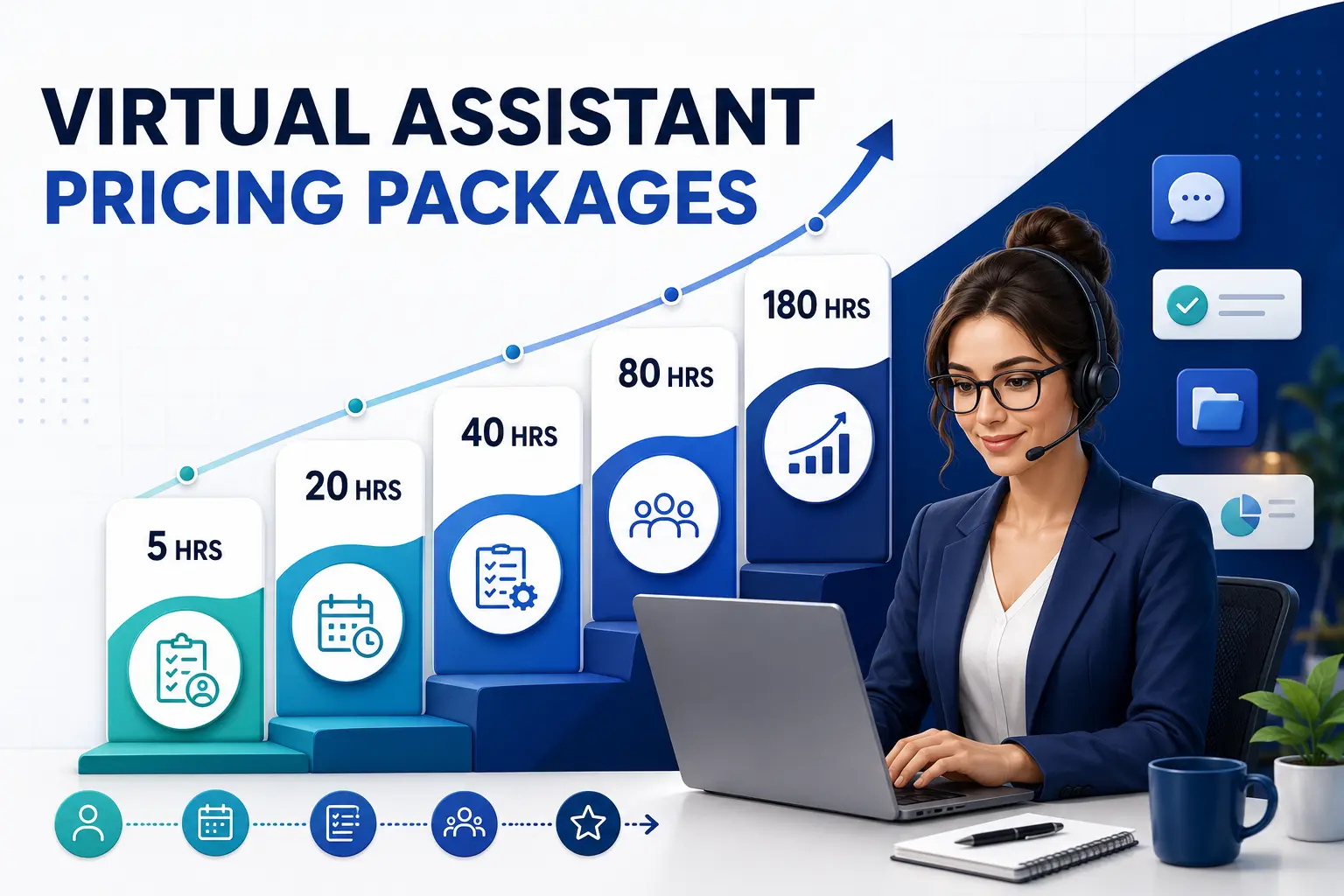
If you want to compare hour allowances and support features before running a pilot, review Ellite Assistant’s current VA pricing plans.
When a task-doer may be exactly what you need
Not every role needs strategic partnership. A reliable task-focused VA can be an excellent fit when work is stable, rules are complete, quality is easy to verify and exceptions are rare. Data formatting, scheduled uploads, file naming and structured list building may reward consistency more than broad judgment.
The problem begins when a business hires task-level support for a workflow that actually requires prioritization, customer context and exception handling. Match the level of ownership to the role. Do not pay for strategic judgment you will never permit the assistant to use, and do not expect strategic ownership from a role designed around isolated instructions.
For role-matched, managed support, explore Ellite Assistant’s dedicated Virtual Assistant services.
Frequently asked questions
What is the difference between a strategic VA and a task-doer?
A task-doer focuses primarily on completing assigned instructions. A strategic or ownership-minded VA understands the intended outcome, asks focused questions, manages routine exceptions, recommends safe next steps and reports results within defined authority.
What is the best interview question for a Virtual Assistant?
Ask: “When the outcome is clear but the instructions are incomplete, what do you do next?” Follow it with a realistic scenario from your business and score how the candidate clarifies, initiates safe work, manages risk, communicates and closes the loop.
Does a proactive VA need fewer instructions?
Over time, usually—but not on day one. A proactive VA still needs the outcome, authority limits, examples, access and escalation rules. The difference is that they convert those inputs into a repeatable workflow and ask more focused questions as context grows.
How do I test whether a VA can think independently?
Use a paid, job-relevant scenario with incomplete but sufficient information. Look for a written plan, prioritized questions, safe assumptions, clear escalation and a final status update. Avoid unpaid tests that reproduce substantial real client work.
Can a Virtual Assistant make decisions for my business?
A VA can make routine operational decisions inside written limits. High-risk financial, legal, employment, pricing and client-commitment decisions should remain with authorized business leaders or qualified professionals unless a formal control structure says otherwise.
How long does it take a VA to become an operational partner?
There is no universal timeline. A narrow recurring workflow may stabilize within weeks; complex or sensitive support takes longer. Expand authority based on demonstrated accuracy, judgment and reporting—not simply time served.
What if my current VA waits for instructions?
First check the operating system. Clarify outcomes, decision limits, priorities and reporting. Then assign one workflow and ask the VA to bring a recommendation with every escalation. If behavior does not improve despite clear support and feedback, the role or person may be mismatched.
Sources
Test for ownership with one controlled workflow
Use five hours of dedicated assistance over seven days to test communication, judgment and follow-through on real recurring work—without committing to a larger plan first.
Start the $49 VA TrialPublic pages and supporting sources were checked on August 31, 2026. Service terms can change and individual requirements vary. The interview scorecard is a practical internal hiring aid, not a validated psychometric assessment. This article provides general business information, not legal, tax, employment or financial advice.
What is the best interview question for a Virtual Assistant?
- How do I know if a Virtual Assistant will scale with my business?
- What is the difference between a strategic VA and a task-doer?
- How do I test if a VA can think independently?
- Can a Virtual Assistant make decisions for my business?